

Best Chafe Tubing for Big Game Fishing
Table of Contents
- Why Chafe Tubing Matters for Big Game Leaders
- Chafe Tubing vs. Chafe Springs: Which Protects Better
- Materials That Stand Up to Heavy Tackle
- Heavy Duty Leader Rigging Techniques
- How to Rig Ballyhoo for Big Game with Chafe Protection
- Sizing Your Chafe Tubing by Leader Diameter and Line Class
- Installation, Inspection, and When to Replace
- Conclusion
- Frequently Asked Questions
Last Updated: October 5, 2026
Why Chafe Tubing Matters for Big Game Leaders
When you're fighting a 400-pound tuna or a marlin determined to take your line into the rocks, the best chafe tubing for big game fishing is the last thing you want to overlook, as your leader can fray at the connection point. Chafe tubing stands between a successful landing and a heartbreaking break-off.
Chafe tubing is a simple sleeve that wraps around your monofilament leader at high-stress connection points, guarding against friction from fish teeth, gill plates, reef edges, and crimped connections. Without it, your leader deteriorates rapidly, especially in the 2-4 inches around your crimp or loop knot where tension concentrates.
Most break-offs don't happen at random points along the line. They happen at the terminal connection, where your leader meets your hook or lure, or where a crimp creates a stress concentration. That's where chafe tubing does its job: it distributes wear across a wider surface area and creates a barrier between your monofilament and whatever's trying to shred it.
For offshore anglers, this isn't optional equipment. It's the difference between consistent success and frustration.
Chafe Tubing vs. Chafe Springs: Which Protects Better
The choice between tubing and spring-style chafe gear comes down to your rigging situation and what you're protecting against.
Chafe tubing is a flexible sleeve that slides over your leader. It's lightweight, invisible to fish, and conforms to the shape of your leader and connection, staying in place through casting and fighting. It's particularly effective against abrasion from fish teeth and gill plates because it creates a continuous protective barrier.
Spring-style chafe gear uses a coiled metal spring. It's more rigid, excels against sharp objects like reef edges, and stays exactly where you position it, the metal won't compress or degrade the way some flexible tubing can under extreme pressure. However, springs are bulkier, more visible, and can twist or shift during a hard fight.
For most big game applications, the best chafe tubing for big game fishing wins: less obtrusive, easier to rig, and sufficient for heavy tackle. Springs work better around rough structure where your leader is dragged across sharp edges repeatedly, like jigging a wreck or fishing tight to rocky bottom.
Materials That Stand Up to Heavy Tackle
Not all chafe tubing is created equal. The material determines how long your protection lasts and how it performs under your specific conditions.
Plastic and Nylon Tubing
Plastic and nylon tubing are the most common options for good reason: affordable, easy to work with, and solid protection for most situations.
Plastic tubing, typically clear or translucent polyethylene or PVC, is lightweight, nearly invisible, and slides easily over your leader.
Nylon tubing is denser and more durable than basic plastic. It's still lightweight and easy to rig but stands up to repeated use more reliably.
Both work best in clear-water or moderate-abrasion situations, not around sharp coral or rough structure where the tubing takes direct contact with hard surfaces.
Teflon and Coated Polyester Braid
| Material | Durability | UV Resistance | Cost | Best For |
|---|---|---|---|---|
| Plastic | Moderate | Poor | Low | Casual fishing, frequent replacement |
| Nylon | Good | Good | Low-Moderate | Regular offshore use, mixed conditions |
| Teflon | Excellent | Excellent | High | Tournament fishing, professional charters |
| Coated Braid | Excellent | Excellent | High | Heavy structure fishing, extended use |
Heavy Duty Leader Rigging Techniques
How you rig your leader determines how effectively your chafe tubing protects it, poor technique can make even premium tubing ineffective.
Start with the right monofilament. Heavy tackle demands 130- to 600-pound test, depending on species and conditions. Thicker mono resists abrasion better on its own, but chafe tubing still matters because connection points are where failure typically occurs.
Crimped connections are the gold standard for heavy tackle. A proper crimp is stronger than the monofilament itself, but it creates a stress concentration point where tubing must sit. Slide your chafe tubing over the leader before crimping, then position it to cover the crimp and extend 1-2 inches on either side, distributing the tension load and keeping the tubing from sliding off during a fight.
Loop-to-loop connections are common in wind-on leader systems. Your chafe tubing should protect both the leader loop and where it meets the main line; some anglers use a short piece around each loop to prevent it cutting into the monofilament under tension.
The crotch break, the angle where your leader changes direction at the connection, is where most abrasion occurs. Your chafe tubing must cover it completely. Don't skimp on length: better to extend slightly beyond the connection than leave any part of the crotch break exposed.
How to Rig Ballyhoo for Big Game with Chafe Protection
Ballyhoo rigging for big game fishing requires precision, and chafe tubing protects your rig from the moment the ballyhoo hits the water.
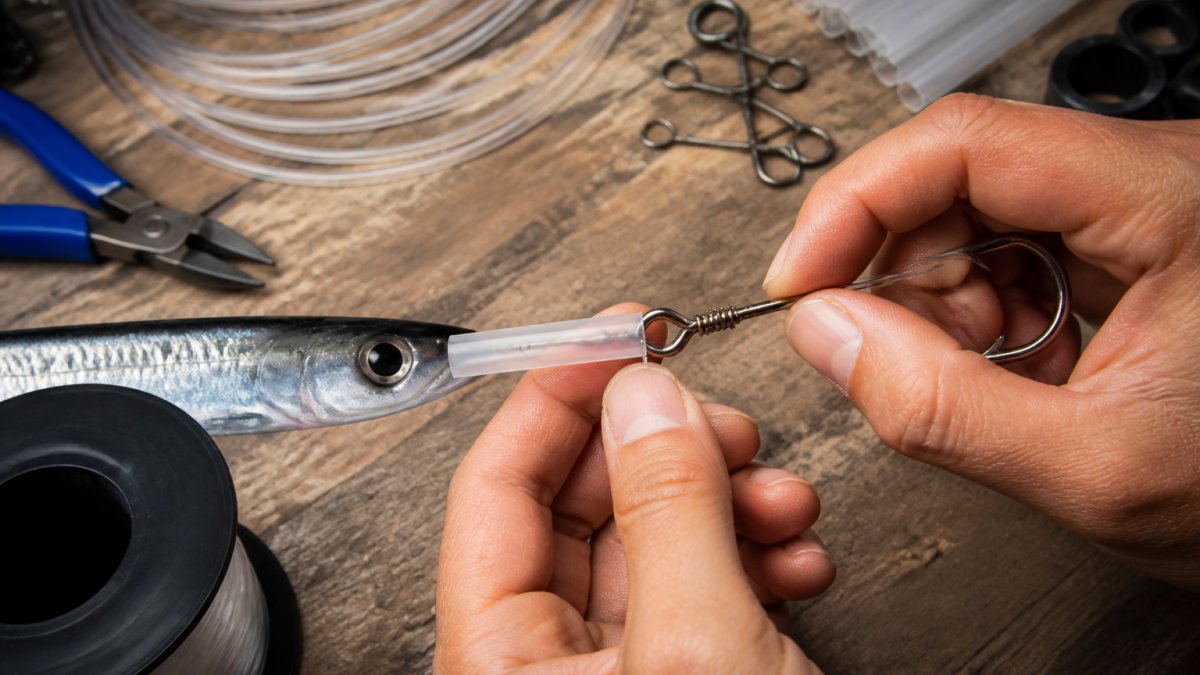
Start with a fresh ballyhoo rigged for your target species. For tuna and billfish, use a 4-6 inch ballyhoo with a single or double hook rig and heavy leader, 130-pound mono minimum for tuna, up to 300-pound or more for marlin.
Thread your chafe tubing onto the leader before crimping your hook connection, positioning it to sit directly over the crimp. Crimp the hook eye securely, this anchors the tubing, which should cover the crimp and extend up the leader at least 1-2 inches, protecting the stress concentration zone.
Next, rig your ballyhoo: insert the hook through the lower jaw and out the eye socket, or use the chin-to-gill method depending on conditions. The ballyhoo's body creates friction against your leader as it swims and when fish strike, and your chafe tubing protects the connection from that constant movement.
Position the tubing at the crotch break, where your leader bends at the hook connection, the first point fish teeth contact. When a tuna or marlin grabs the ballyhoo, its teeth hit the tubing before your monofilament, absorbing the initial damage and distributing wear across a wider surface.
For wind-on leader systems, add a second piece of tubing around the loop connection where your ballyhoo leader ties to the main line, protecting the loop from cutting into the monofilament during a fight or at trolling speed.
Test your rig before deployment: the tubing shouldn't slide or shift under tension. If it does, your crimp wasn't tight enough or the tubing's inside diameter is too large. Adjust accordingly.
Sizing Your Chafe Tubing by Leader Diameter and Line Class
Choosing the correct tubing size is essential. Too small, and it won't fit over your leader. Too large, and it'll slide around during a fight, leaving your connection unprotected.
Chafe tubing is sized by inside diameter (ID), measured in inches or millimeters, and must match your monofilament diameter. Most manufacturers provide sizing charts; here's what you need for common big game applications.
| Leader Line Class | Monofilament Diameter (inches) | Recommended Tubing ID | Common Applications |
|---|---|---|---|
| 80-pound mono | 0.020" | 3/32" | Medium-weight trolling |
| 130-pound mono | 0.028" | 1/8" | Tuna, smaller billfish |
| 200-pound mono | 0.035" | 5/32" | Large tuna, wahoo |
| 300-pound mono | 0.042" | 3/16" | Marlin, large tuna |
| 600-pound mono | 0.060" | 1/4" | Giant tuna, big marlin |
The fit should be snug but not tight, you should slide the tubing over your leader by hand without forcing it. If you need pliers or significant pressure, it's too small; if it slides loosely, it's too large and will shift during use.
When in doubt, test fit your tubing on a sample of your leader material before committing to a full rig. Monofilament varies slightly in actual diameter even within the same pound-test rating, and a quick test fit saves frustration later.
Titan Guard Chafe Tubing is engineered to fit standard monofilament diameters across all line classes, with consistent, reliable sizing that matters when you're rigging for a tournament or charter trip where precision counts.
Installation, Inspection, and When to Replace
Installing chafe tubing correctly takes less than a minute, but doing it wrong can compromise your entire leader.
Installation: Slide the tubing over your leader before making your terminal connection, positioned to cover the crimp or knot once complete. After crimping or tying your hook, slide it into final position, centered over the connection with equal coverage on both sides, for a 2-inch piece protecting a crimp, roughly 1 inch on either side.
Inspection: Check your tubing before every trip for cracks, brittleness, or discoloration. If it's hard or inflexible, UV damage has degraded it, replace it. Teeth marks or gouges mean it's doing its job, but assess whether the damage compromised the monofilament underneath. If the tubing has slipped or shifted, your rig isn't protected properly, re-rig or replace it.
Replacement: Replace your chafe tubing whenever you replace your leader. If re-using a leader, inspect it carefully and replace the tubing if you have any doubt about its condition, the cost of tubing is negligible next to losing a fish or missing a tournament opportunity.
Heavy-duty tubing still degrades. Recreational anglers can get a full season from a single rig if they store it out of direct sunlight in a cool, dry environment.
Conclusion
The difference between a successful big game trip and a heartbreaking break-off often comes down to details, and chafe tubing separates professionals from anglers who get lucky occasionally.
When you're targeting 300-pound tuna or marlin that can take your line into rough structure, your leader needs protection at the exact points where failure happens most: the connections. Titan Guard Chafe Tubing is engineered for these demands. Our heavy-duty sleeving protects monofilament leaders from abrasion and sharp fish teeth, manufactured in our family-owned factory for reliability when the stakes are highest. With fast shipping and hassle-free returns, you can rig with confidence. Shop Titan Guard Chafe Tubing and land the fish you deserve.
Frequently Asked Questions
Why is chafe tubing essential for big game fishing leaders?
Chafe tubing shields monofilament leaders from sharp fish teeth, rough gill plates, and abrasion at connection points. On trophy species like tuna and marlin, unprotected leaders fray and fail under tension. A single piece of tubing placed at the crotch break, where the leader loop meets the main line, can mean the difference between landing a 400-pound fish and watching your rig snap.
What is the difference between chafe tubing and chafe springs?
Chafe tubing is flexible sleeving that slides over monofilament and conforms to leader shape, offering continuous abrasion protection. Metal spring-style chafe gear uses coiled springs that protect specific zones but leave gaps. Tubing covers more surface area and works better for wind-on leader systems; springs suit anglers who prefer rigid, compact protection. Tubing is the standard choice for live-bait and trolling setups targeting heavy tackle.
How do I know what size chafe tubing to buy for my leader?
Match tubing inside diameter to your monofilament diameter. Check your leader's pound test rating and the tubing product specs before ordering. Loose tubing slides; tight tubing crimps the line.
Can I use the same chafe tubing for live-bait fishing and trolling?
Yes. Clear or black tubing protects leaders equally well in both applications. The material, whether plastic, nylon, or Teflon, matters more than the fishing method. Clear tubing is less visible to fish. Choose based on your target species and water clarity, not your rigging style.