

Best Leader Protection for Reef Fishing
Table of Contents
- Why Leader Protection Matters for Reef Fishing
- Fishing Leader Chafe Tubing: The First Line of Defense
- Leader Sleeves for Saltwater Fishing: Types and Applications
- How to Protect Monofilament Leaders from Abrasion
- Saltwater Fishing Leader Length and Diameter for Reef Conditions
- Material Selection: Fluorocarbon vs. Monofilament for Reef Structure
- Installation, Maintenance, and When to Replace
- Frequently Asked Questions
Last Updated: October 11, 2026
Why Leader Protection Matters for Reef Fishing
When fighting large fish near sharp coral or rocky structure, your leader takes constant punishment. Reef environments are unforgiving, jagged edges, aggressive fish teeth, and abrasive surfaces all threaten your monofilament. Without proper protection, your leader frays, weakens, and breaks at the worst moment. Best leader protection for reef fishing is essential to prevent lost fish and broken rigs.
Your leader connects your mainline to your lure and is the first line of defense against structure and teeth. Reef fishing demands heavy-duty solutions because coral, rocks, and aggressive species all threaten your tackle.
The solution is using the right protection method matched to your specific conditions. Below, we'll show you how to protect your leaders and which methods work best for different reef scenarios.
Fishing Leader Chafe Tubing: The First Line of Defense
Fishing leader chafe tubing is a protective sleeve that slides over your monofilament leader to guard against abrasion and sharp edges. When your leader rubs against coral or rough bottom, the tubing absorbs the wear instead of your monofilament.
Chafe tubing creates a barrier between your leader and abrasive surfaces. Most tubing is made from durable saltwater-resistant materials. Installation is straightforward: slide the tubing onto your leader before tying it to your mainline, then position it where contact is most likely.
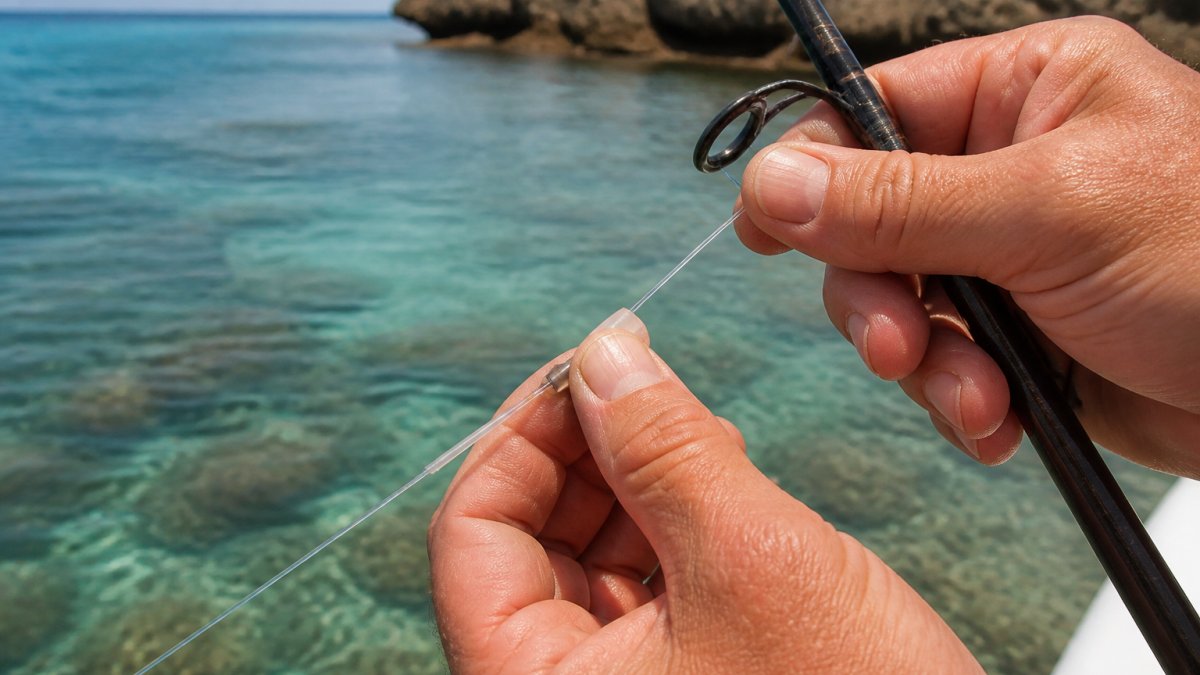
When your leader is protected, you can fish aggressively near structure without worrying about line failure. You'll land more fish because your tackle stays intact under pressure. Titan Guard Chafe Tubing is engineered for heavy-duty saltwater use and manufactured in the Finger Lakes Region of New York.
Leader Sleeves for Saltwater Fishing: Types and Applications
Leader sleeves for saltwater fishing come in several varieties, each designed for specific conditions and reef hazards. Understanding the differences, and the trade-offs between sleeves, wire, and sacrificial sections, helps you choose the right protection for your target species and structure type.
Rigid tubing offers maximum protection against sharp objects and is best for coral, rocks, and rough bottom. Rigid sleeves don't flex much, which can slightly affect lure action in clear water. However, in high-contact reef zones with aggressive species like grouper, snapper, and amberjack, the protection trade-off is worth it.
Semi-flexible tubing balances protection with presentation, allowing natural movement while guarding against most abrasion. It works well in mixed reef conditions and for species like cobia or permit that are sensitive to unnatural lure action.
Soft sleeves provide basic protection against minor abrasion while maintaining natural feel. Use them in clear water for selective species like bonefish or tarpon. They're not suitable for heavy structure or toothy species.
Wire bite traces (1×7 or 7×7 stainless steel, 12-24 inches) are nearly impossible for teeth to cut through and resist coral abrasion completely. The downside is visibility and stiffness, wire restricts lure movement. Wire traces are most effective for barracuda, pike, and other species where bite-through is the primary threat.
Sacrificial leader sections use heavier material (100-pound monofilament or heavy fluorocarbon) for the first 12-24 inches, then step down to lighter material. This protects the critical strike zone without compromising presentation throughout the entire leader.
Comparison by reef hazard:
- Coral and sharp rock: Rigid tubing or wire traces.
- Aggressive fish teeth: Wire traces or rigid tubing.
- Mixed structure with selective fish: Semi-flexible tubing or sacrificial sections.
- Deep reef with limited visibility: Sacrificial heavy-monofilament sections or wire traces.
Reef fishing typically demands rigid or semi-flexible options, or a combination approach using wire or sacrificial sections. The choice depends on your target species, water clarity, and whether you prioritize maximum protection or natural presentation.
How to Protect Monofilament Leaders from Abrasion
Most damage occurs where your leader first touches structure, typically the first 12 to 24 inches from your lure or hook.
Slide your chafe tubing onto the leader, positioning it where you expect the most wear. Secure it with small knots or crimps on either end so it doesn't slide during fishing.
Test your setup before heading out by pulling the tubing gently and casting a few times to confirm it doesn't affect lure action.
Position protection where actual contact occurs. If your tubing is 3 feet from your lure but your leader contacts structure at 1 foot, you're unprotected where it matters most.
After each trip, rinse your leader and tubing in fresh water. Check for visible damage and replace cracked, frayed, or torn tubing before your next outing.
Saltwater Fishing Leader Length and Diameter for Reef Conditions
For reef fishing, leader length and diameter depend on your target species, water clarity, structure type, and fishing method. Reef structure demands heavier protection and shorter, stronger leaders than open-water or flats fishing.
Leader length for reef fishing:
Most reef anglers use leaders between 24 and 48 inches:
- 12-24 inches: Use in very turbid water (under 3 feet visibility), when targeting aggressive species like grouper or snapper, or in heavy structure where a long leader wraps around coral. Also better with wire traces or rigid tubing.
- 24-36 inches: Most common for mixed reef conditions. Use for permit, cobia, or medium-sized grouper in moderate clarity (3-8 feet).
- 36-48 inches: Use in clearer water (8+ feet visibility) where fish are more cautious. Standard for bonefish or permit on shallow reefs.
Diameter and pound-test for reef structure:
Heavier pound-test leaders resist abrasion better but are more visible to fish:
- Monofilament leaders: Most reef professionals use 40-80 pound test. Use 40-50 pound mono in clear water or for selective species; use 60-80 pound mono in turbid water or heavy structure.
- Fluorocarbon leaders: Use 30-50 pound fluorocarbon in clear-water reef situations where fish are selective. Fluorocarbon is less stretchy, so you feel bites more directly. However, it's slightly more brittle, so knot quality matters more.
Adjusting leader diameter by target species:
- Grouper: 50-80 pound monofilament, 24-36 inches. Use rigid tubing or sacrificial heavy-mono sections in the first 12 inches.
- Snapper: 40-60 pound monofilament or 30-50 pound fluorocarbon, 24-36 inches.
- Permit and cobia: 30-50 pound fluorocarbon, 36-48 inches. Use semi-flexible tubing or sacrificial sections only where structure contact is likely.
- Barracuda and mackerel: 40-60 pound monofilament or wire trace (1×7 stainless, 12-24 inches).
- Amberjack and large jacks: 60-80 pound monofilament, 24-36 inches. Use rigid tubing in the first 12-18 inches.
Adjusting for water clarity:
In turbid water (visibility under 3 feet), fish rely more on vibration and smell, so heavier, more visible leaders have minimal impact on bite rate. You can use 60-80 pound monofilament without concern. In clear water (8+ feet visibility), fish inspect lures carefully, so lighter, less visible leaders and longer distances between mainline and lure matter more. Step down to 40-50 pound monofilament or 30-40 pound fluorocarbon, and extend your leader to 36-48 inches.
The protection-to-diameter relationship:
Your leader material and diameter choice should match your protection strategy. If you're using heavy monofilament (60-80 pound), you're already accepting some visibility trade-off for durability and abrasion resistance. Pair it with rigid tubing or wire traces for maximum protection. If you've chosen lighter fluorocarbon (30-50 pound) for invisibility, use semi-flexible tubing or sacrificial sections to protect the critical first 12-24 inches without compromising the advantage you gained by switching materials.
Testing your setup before fishing:
Once you've chosen your leader length and diameter, test the knot strength. Tie your leader to your mainline using an Albright knot or improved clinch knot, then pull hard, the knot should hold without slipping. If your leader material is significantly heavier than your mainline, the Albright knot is more reliable. If they're similar diameter, an improved clinch knot works fine. Test your terminal knot (the knot connecting your lure) the same way. A weak knot is more likely to fail than a weak leader, so knot quality is your first priority.
Material Selection: Fluorocarbon vs. Monofilament for Reef Structure
Fluorocarbon and monofilament each have strengths and weaknesses in reef environments. Fluorocarbon is denser, sinks faster, and is nearly invisible underwater. It's less stretchy, so you feel bites more directly. For clear-water reefs where fish are selective, fluorocarbon is often the better choice.
Monofilament is more forgiving. It stretches slightly, absorbing shock when a large fish runs hard. It's more visible than fluorocarbon, but it's also more durable against abrasion in rough conditions. Many reef anglers prefer monofilament because it handles structure better without breaking as easily.
Neither material is inherently superior, the choice depends on conditions. In clear water with selective fish, fluorocarbon wins. In turbid water or heavy structure, monofilament's durability often makes it the practical choice. Both benefit equally from best leader protection for reef fishing.
The key insight most anglers miss: your leader material choice should match your protection strategy. If you're using monofilament, you're already accepting some visibility trade-off for durability. Pair it with strong chafe tubing. If you've chosen fluorocarbon for invisibility, use tubing that doesn't compromise the advantage you gained by switching materials.
| Leader Material | Best For | Visibility | Abrasion Resistance | Stretch |
|---|---|---|---|---|
| Monofilament | Rough structure, aggressive species | Moderate | High | High |
| Fluorocarbon | Clear water, selective fish | Low | Moderate | Low |
Installation, Maintenance, and When to Replace
Installation of best leader protection for reef fishing takes minutes but makes a significant difference. Start with your monofilament leader already attached to your mainline. Slide the chafe tubing over the leader, positioning it where structure contact is most likely. Secure both ends with small uni-knots or crimps to prevent sliding.
Maintenance extends the life of your entire rig. After every saltwater trip, rinse your leaders and tubing in fresh water to remove salt and debris. Salt accelerates corrosion and weakens connections. Inspect the tubing for cracks, splits, or white stress marks. These are signs that replacement is coming soon.
Replace your tubing when you see visible damage or after a particularly brutal day near sharp structure. A torn piece of tubing is worse than no tubing because it can fail suddenly under load. Many professionals replace tubing every 10 to 15 fishing days in heavy reef conditions.
Knot integrity matters as much as tubing condition. Check your uni-knots regularly. If they're slipping or showing wear, retie them. A knot failure is more likely to cause line breakage than tubing failure, so don't neglect this step.
Reef fishing demands tackle that can handle abuse. Your leader is the critical connection between your mainline and your lure, and it faces constant punishment from structure and aggressive fish. Best leader protection for reef fishing isn't optional, it's the difference between landing trophy fish and watching them break off near rocks and coral.
Titan Guard Chafe Tubing protects monofilament leaders with heavy-duty sleeving engineered for saltwater demands. Made in the Finger Lakes Region of New York, our tubing guards against sharp fish teeth and abrasive structure so you can fish confidently near bottom. With fast shipping and hassle-free returns, getting the protection your reef rig needs is straightforward.
Frequently Asked Questions
Do I need leader protection when fishing around reefs?
Yes. Reef structure, coral, and sharp rocks cause rapid abrasion on exposed monofilament leaders. Without protection, your mainline will fray and snap under load before you land the fish. Leader protection, especially chafe tubing, reduces break-offs significantly, particularly when targeting toothy species in abrasive reef environments.
What is the best way to protect a monofilament leader from reef abrasion?
Chafe tubing slipped over your monofilament leader is the most effective method. Position the tubing over high-friction zones where your line contacts sharp structure. For maximum protection, use heavy-duty sleeving rated for saltwater use and ensure it's sized correctly to fit snugly without slipping. Pair this with proper knot strength and regular inspection before each trip.
How long should a leader be for saltwater fishing around reefs?
Leader length depends on water clarity and target species. In clear reef water, use 3-4 feet of leader to maintain line stealth while providing adequate protection. For murky conditions or when targeting aggressive species, 2-3 feet may suffice. Always match leader diameter to your mainline breaking strain and the expected bite strength of your target species to maintain balanced strength throughout your terminal tackle.
Does chafe tubing protect fishing leaders from sharp teeth?
Yes. Heavy-duty chafe tubing protects against both abrasion from reef structure and punctures from sharp fish teeth. Position the tubing where your leader is most vulnerable, near the hook or lure connection point where toothy fish make contact. Quality saltwater-rated tubing resists tearing and maintains its protective barrier even under the pressure of a hard-fighting fish.