

Offshore Leader Protection for Tournament Fishing
Table of Contents
- Why Offshore Leader Protection Decides Tournament Outcomes
- Best Chafe Tubing for Big Game Fishing: What to Look For
- How to Rig Offshore Leaders for Tournaments
- Preventing Leader Failure During Big Game Fights
- Tournament Rules, Leader Length, and Compliance Checks
- Emergency Repair Kits and Pre-Tournament Prep
- Frequently Asked Questions
Last Updated: October 2, 2026
Why Offshore Leader Protection Decides Tournament Outcomes
Offshore leader protection is the practice of shielding the last few feet of line between your hook and your main line from abrasion, teeth, and structural failure. In tournament fishing, it is often the difference between a weighed fish and a story about the one that got away. At Titan Guard Chafe Tubing, we provide heavy-duty protection for monofilament leaders, specifically engineered for the demands of sport fishing.
How Abrasion and Teeth Damage Monofilament
Monofilament is tough, but it is not armor. A billfish's bill, a tuna's gill plate, or a wahoo's teeth will shave a leader in seconds.
Common damage sources during a fight:
- Contact with the fish's bill, jaw, or gill plate
- Rubbing against the boat's rub rail or transom
- Chafing on reef, wreck, or floating debris
- Repeated flexing at the crimp or swivel
The Real Cost of a Leader Failure During a Fight
A leader failure costs you the fish, the entry, and the trip. In a tournament, it can cost you the whole event. One chafed section parts under load, and hours of running and trolling are gone. That is why serious crews treat leader protection as insurance, not an accessory.
Best Chafe Tubing for Big Game Fishing: What to Look For
The best chafe tubing for big game fishing is heavy-duty sleeving that fits your leader diameter, holds its position under drag, and resists abrasion without adding bulk that spooks fish.
When you shop, judge every option on four things:
- Material that resists cutting and holds up in saltwater
- Wall thickness that shields the line without stiffening the rig
- Fit that matches your exact leader diameter
- Compatibility with your wind-on system and swivels
Material, Wall Thickness, and Fit on Heavy Monofilament
Thicker walls give more protection, but too much bulk changes how the leader behaves in the water. Aim for a wall thick enough to absorb a tooth strike, yet thin enough to keep the leader flexible. Test the fit: the tubing should slide on with effort and stay put.
Wind-On Leader Compatibility and Splice Protection
Wind-on leaders pass smoothly through the guides, but the splice is a weak point. Chafe tubing over the splice guards it from wear. Check that your tubing clears the splice without bunching; if it binds, step down a size.
How to Rig Offshore Leaders for Tournaments
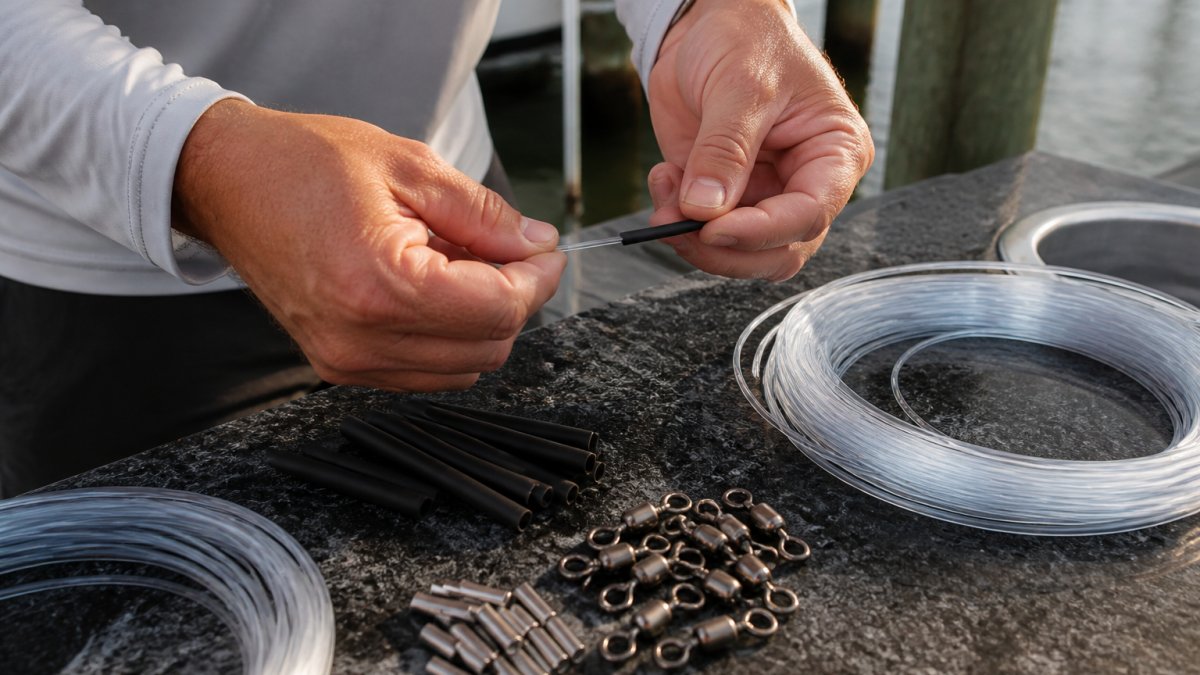
Rigging offshore leaders for tournaments comes down to four things: correctly sized crimps, matched hardware, chafe gear placed where the line actually rubs, and a pull-test that mimics a real strike. Get them wrong and the failure will happen at the worst possible moment, usually at the boat, in front of the weighmaster.
Crimp Sizing, Tooling, and the Mechanics of a Cold Weld
A crimp grips by cold-flowing the metal around the mono so the two surfaces lock together. That only works when the crimp's inner diameter matches the leader's outer diameter and the tool closes to a controlled depth.
A common pattern among tournament crews:
- Match crimp ID to leader OD, not to leader "pound test." A 200 lb mono and a 200 lb fluorocarbon rarely share the same diameter. Buy crimps by measured diameter with calipers, not by the number on the spool.
- Use a purpose-built crimping tool, not pliers or a bench vise. Pliers flatten one side and leave the other round, which creates a stress riser right where the leader exits the crimp.
- Seat the crimp in one smooth stroke. Two partial squeezes work-harden the metal and can crack it.
- Leave a short tag end, roughly the diameter of the crimp, so the crimp can't creep under load.
Swivels, Hardware, and Load Path
A ball-bearing swivel kills line twist from trolled lures and gives you a clean, inspectable connection point. Size it to the leader, not the main line, an oversized swivel adds mass that changes how the leader tracks and can spook a shy billfish on the drop-back.
- Main line to top of leader (splice, knot, or wind-on)
- Leader to swivel
- Swivel to leader or bite section
- Bite section to hook
Chafe Gear Placement: Where the Line Actually Rubs
Chafe tubing only helps if it sits where the abrasion happens. On an offshore rig that is usually three zones:
- The last few feet at the hook, where teeth, bills, and gill plates make contact
- The splice or connection point, where repeated flexing fatigues the line
- Anywhere the leader crosses the rub rail, transom, or rod tip during the fight
The Pull-Test That Actually Predicts Failure
A pull-test on the dock tells you whether the rig holds at rest, not after 40 minutes of drag. Two things to add:
- Load the rig to a fraction of its rated strength and hold it for several seconds, watching the crimp and the splice for creep.
- Flex the leader at the crimp a few times after the load test, then load it again. This mimics the repeated flexing a leader sees during a fight and exposes crimps that were seated too shallow.
A Note on Heat and Knot Fatigue
Most rigging guides stop at "tie a good knot." The failure mode they skip is heat. Drawing a heavy mono knot tight without lubrication generates friction that can glaze the line right at the knot, invisible until it pops under load. Wet every knot before you seat it, and seat it slowly.
Preventing Leader Failure During Big Game Fights
Preventing leader failure during big game fights means managing drag, understanding stretch, watching for heat buildup at the crimp, and reading the warning signs before the line parts. Most failures are preventable and diagnosable in the first 30 seconds of the fight.
Drag Pressure, Stretch Factor, and the Math That Matters
Monofilament stretches, which absorbs shock but means your drag setting and leader length work together in ways that are not obvious from the rod tip.
Heat Buildup at the Crimp: The Failure Nobody Sees
Under sustained drag, the leader moves slightly inside the crimp. That micro-movement generates friction, and friction generates heat. On a long fight, a big tuna that refuses to come up, a billfish that sounds, the crimp can get warm enough to soften the mono at the exit point. The damage is invisible; the leader looks fine, then parts at the crimp on the next surge.
What to do about it:
- Keep drag smooth, not jerky. Every drag spike is a heat spike at the crimp.
- Avoid "pumping" the rod aggressively on heavy leaders. The repeated load-unload cycle works the crimp and the knot.
- Re-inspect the crimp after every fish. Look for a slight gloss or discoloration at the exit point. If you see it, re-rig.
Reading the Warning Signs in Real Time
A leader rarely fails without warning. The signs are subtle but there:
- A sudden loss of tension, the fish is still there, but the leader has stretched past its elastic limit or a crimp has started to creep.
- Fraying visible near the swivel, abrasion is winning. Shorten the fight or change the angle.
- The leader changing angle sharply at the boat, the fish is turning under the hull, and the leader is now rubbing the rub rail or the transom. This is the single most common moment for a leader to part.
- A change in the sound of the drag, a drag that suddenly runs smoother or rougher often means the load on the leader has changed, not the fish.
Managing the Boat, Not Just the Fish
Most leader failures in tournaments happen within 50 feet of the boat, not at the hookset. The angler's job is the fish. The crew's job is the geometry.
- Keep the fish off the rub rail. A leader that touches the rail under load is being cut, even if you cannot see it.
- Turn the boat, not the rod. Chasing a fish with the rod puts the leader at bad angles. Chasing with the boat keeps the load straight.
- Have the leader man ready before the fish is close. Gloves on, chafe gear checked, crimp inspected. The last 30 seconds of the fight are where tournaments are won and lost.
The Post-Fight Inspection That Saves the Next Fish
After every fish, before the next bait goes in the water:
- Run the leader through your fingers and feel for roughness.
- Inspect the crimp for gloss, discoloration, or a shortened tag end.
- Check the swivel for binding or deformation.
- Re-tie or re-crimp anything that feels wrong.
Tournament Rules, Leader Length, and Compliance Checks
Tournament rules on leader length and terminal tackle vary by event, so always read your specific rulebook before you rig. Many events follow IGFA international angling rules as their baseline, but local rules can be stricter.
Check these before every tournament:
- Maximum and minimum leader length
- Allowed swivels and connections
- Double-line and wind-on rules
- Any gear restrictions for your target species
Emergency Repair Kits and Pre-Tournament Prep
Pack these items:
- Spare chafe tubing in your main leader sizes
- Extra crimps and a backup crimping tool
- Pre-cut leader sections in tournament-legal lengths
- Spare ball-bearing swivels
- Sharp cutters and a lighter for tag ends
One gap most guides miss: environmental wear. Sun and salt break down monofilament over time. Store leaders out of direct sunlight and replace them each season, even if they look fine, UV damage is invisible until it fails.
Frequently Asked Questions
Why is leader protection critical in offshore tournament fishing?
Tournament fishing puts leaders under constant stress from fish teeth, bill wraps, boat rubs, and reef contact. A single nick in a monofilament leader can drop tensile strength enough to cause line parting under drag pressure. Chafe tubing shields the leader at high-contact points, so abrasion resistance and knot integrity hold through long fights with tuna and billfish.
What are the benefits of using chafe tubing on monofilament leaders?
Chafe tubing absorbs abrasion that would otherwise cut into the leader, guards against sharp fish teeth, and protects crimp connections and wind-on splices from wear. It also helps hold terminal tackle in position during a hook set. For anglers building a best chafe tubing for big game fishing setup, the tubing adds a sacrificial layer that fails before the leader does.
How do you rig chafe tubing for maximum effectiveness?
Slide the tubing over the leader before tying or crimping terminal tackle, position it at the highest-contact zone near the hook or lure, and secure it so it cannot slide under load. Match tubing inner diameter to line diameter, keep crimps clean, and inspect the tubing after every fish. Replacing worn tubing is faster than re-rigging a full offshore leader protection setup mid-tournament.
How much of a hassle is installing chafe tubing on existing leaders?
Installation takes a minute or two per leader once you have a routine. Pre-cut leader sections at your rigging station, thread tubing on before crimping, and store finished rigs in labeled coils. Most captains rig a full set the night before a tournament, so on-the-water changes only involve swapping pre-built leaders rather than rebuilding from scratch.
A leader failure in a tournament is almost always a prep problem, not a luck problem. Titan Guard Chafe Tubing makes heavy-duty sleeving that guards monofilament leaders against abrasion and sharp teeth, so you can fight big game fish with confidence. Our tubing is made in our family-owned factory in the Finger Lakes Region of New York, ships fast, and comes with hassle-free returns. Get started with Titan Guard Chafe Tubing and rig every leader like the tournament depends on it.